UW–Madison is preparing the next generation—of entrepreneurs, and of batteries. “Next-gen” batteries are on the horizon, and NSF I-Corps™ alumna and Early Career Entrepreneur-in-Residence Jiajie Sui is helping to commercialize them.
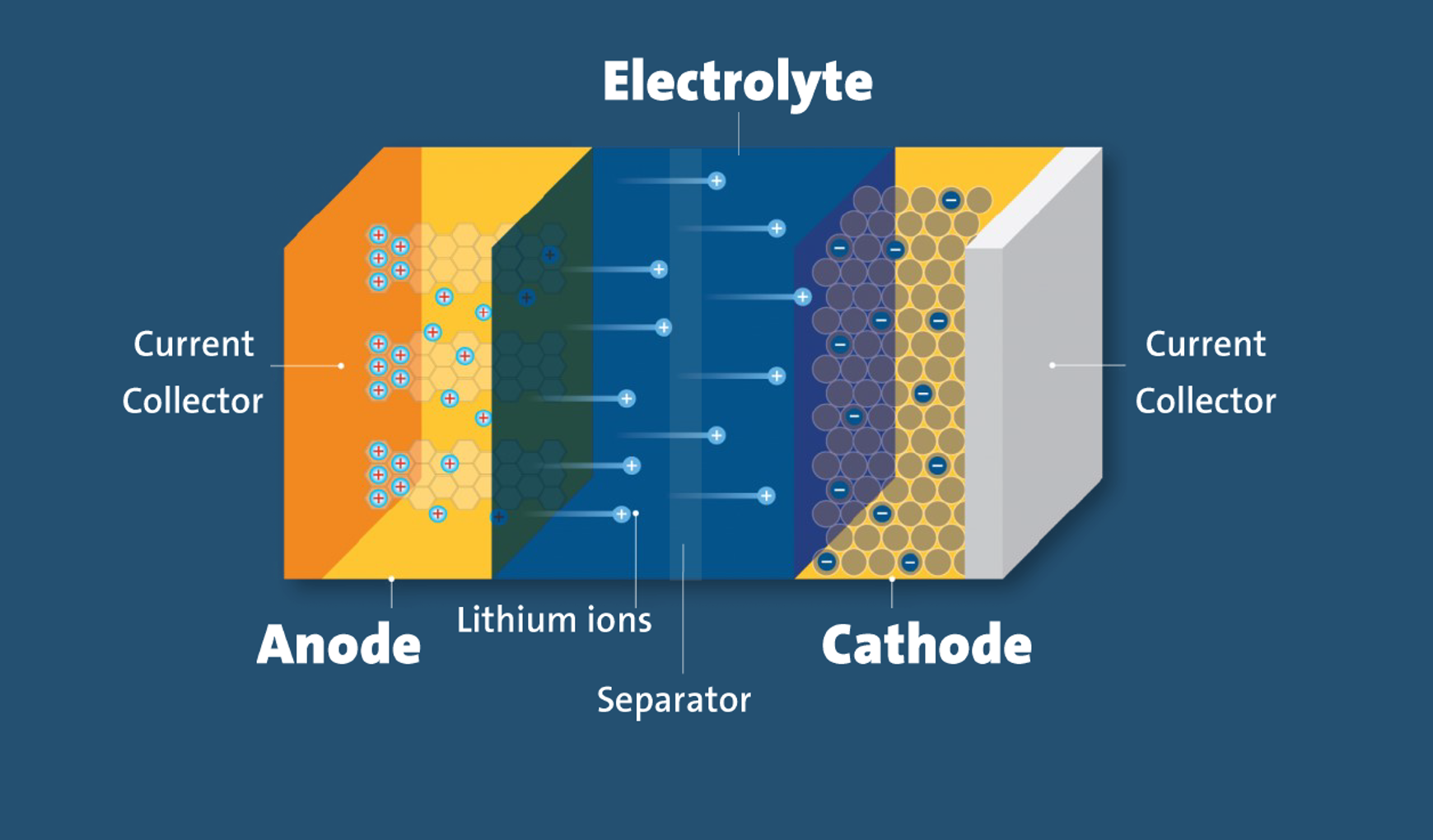
All rechargeable batteries use anodes and cathodes to facilitate the transfer of power when charging (taking in power) or discharging (putting out power). The anodes in current batteries are made from graphite, which is a cheap and effective material, but higher-capacity, quicker-charging, and even lower-cost batteries use metal anodes instead. Metal also makes the entire battery faster and safer in the long term.
These metal anodes work best when they are smooth. However, as the battery is used, the energy transfer can cause metallic branches called dendrites to form. Dendrites make the surface of the anode rough and can reduce energy storage and battery lifespan, or even short them out altogether, resulting in inefficiency and risk.
Enter Sui and her PI Xudong Wang, a Grainger Institute for Engineering Professor in the Department of Materials Science and Engineering (MSE). They have developed a porous ferroelectric separator membrane made from a polymer called P(VDF-TrFE). This separator limits dendrite growth—a process the team calls “active dendrite suppression”—and protects rechargeable batteries from the issues such defects cause.
In suppressing dendrites, the separator reduces battery failure, extends lifespan, prevents short circuits and overheating, and enhances efficiency by over 20%—overall improving longevity, performance, safety, and cost-effectiveness in manufacturing. It also offers a universal, scalable solution for sustainable futures through EVs, renewable energy, and portable devices.
Although Sui does not have direct experience with batteries, she knows ferroelectricity and polymers and was able to apply that knowledge to the battery separator. Through her research in amino acid-based functional materials, she explored different applications such as piezoelectricity, proton conductivity, and carbon absorption. Learning about these areas introduced her to many real-world materials challenges that she wanted to help solve. After receiving her master’s degree from University of Washington, Sui was able to embody the Wisconsin Idea and pursue those real-world solutions during her MSE PhD right here at UW–Madison.
“I realized bringing research innovations to the real world was something I really wanted to do, which led me to explore tech transfer and entrepreneurship opportunities on campus,” she said.
She signed up for the Morgridge Entrepreneurial Bootcamp (MEB) program, investigated practical options, and designed her plan for entrepreneurship after her doctoral studies. Her PI Wang was instrumental in this process.
“Wang is fully supportive and shared his experience of co-founding a tech startup,” Sui said. “He has many patents and the passion to commercialize his technology, but he lacks the right person and time to do it by himself. That’s when we decided to team up and to do something.”
Battery and energy related innovations have substantial market potential, and the separator solves a key problem in advancing that market. After carefully considering patents, commercialization potential, technology readiness level, and their personal research expertise, Sui and Wang landed on the ferroelectric battery separator with the startup FerroMX.
Sui and Wang then participated in 2024’s I-Corps cohort with industry mentor Nasser Kutkut. The I-Corps program allowed Sui, now serving as FerroMX’s Entrepreneurial Lead, opportunities to interact with real people and validate the market. She honed product-market fit, explored potential improvements based on customer feedback, and developed communication skills she wouldn’t have in solely a research setting.
“I-Corps is beneficial for both product development and for personal professional growth,” she said.
Since completing the I-Corps program, Sui has been selected as an Early Career Entrepreneur-in-Residence (EEIR) through TEO’s partner office, the newly established Badger Tech Foundry. EEIR is one option for UW–Madison PhDs to forge a pathway from entrepreneurial education like MEB and I-Corps into the commercial market. The program selects promising technologies to provide training and hands-on development for strategic launch.
“I started as an EEIR in November 2025 to continue commercializing FerroMX, including conducting more research to improve the technical readiness for market, more market research and customer interviews, and getting more training as an entrepreneur,” Sui said.
Next steps for Sui and FerroMX include developing a minimum viable product (MVP) and fundraising, with the goal to generate revenue in 2027.
“The dendrite growth problem our technology aims to solve is critical in the market, and it’s one of the reasons holding back advancing next gen batteries. We have demonstrated its impact and performance improvement in real battery systems, and we have the technical expertise to move forward and pivot the technology if needed,” she said.
Sui encourages others to sign up for opportunities like MEB and I-Corps. “It’s a great start to explore entrepreneurial journeys or just industrial jobs in general,” she said. Sui is a perfect example of how entrepreneurial training at UW–Madison equips the next generation of founders with the next generation of technologies that can solve real-world issues—just like she aspired to.
• • •
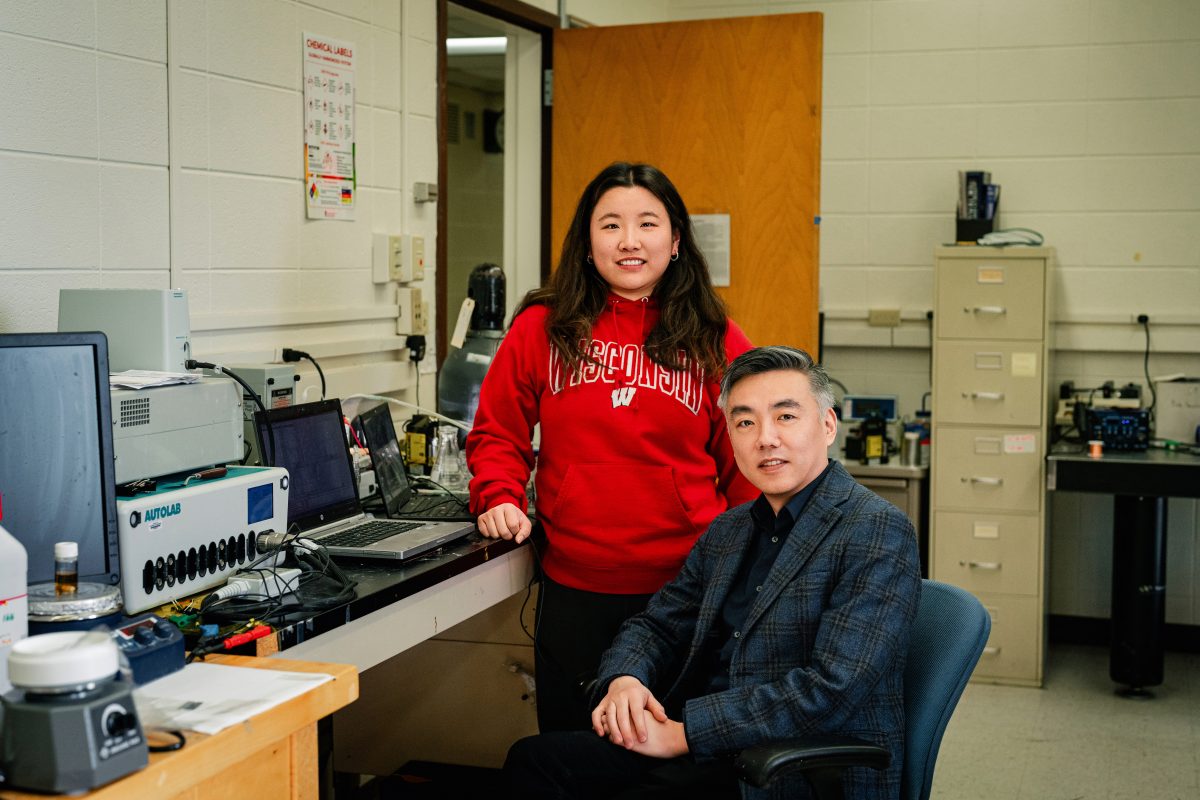
Featured image: Jiajie Sui (standing), entrepreneurial lead for FerroMX, and professor Xudong Wang (seated), PI and technical lead for the project.
Written by: Bri Meyer